


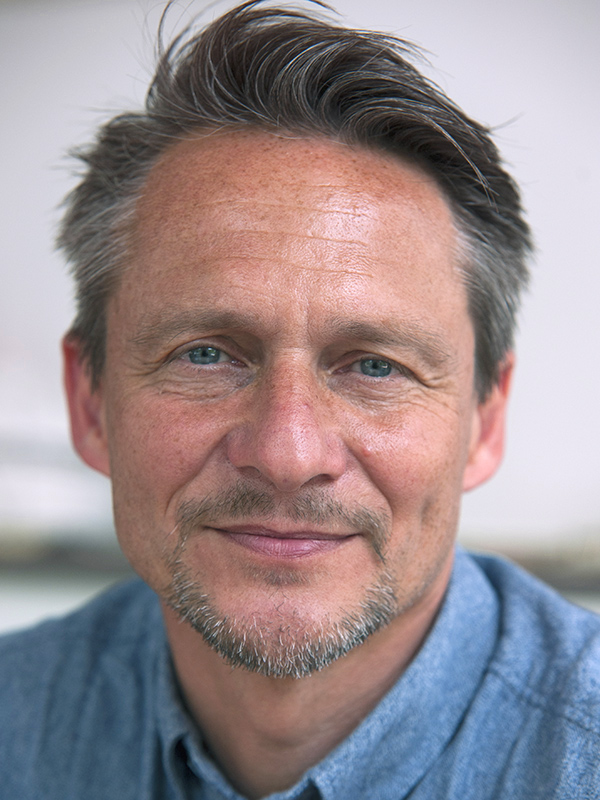
Foto: Frobenius Institut
Roland Hardenberg has been researching in Odisha, India, since 1995. His first research was on the Gajapati kingship and the renewal (nabakalebara) of the main gods of the Jagannatha Temple in Puri, Odisha. From this research two monographs have emerged: Hardenberg, Roland. König ohne Reich: Rituale des Königtums in Orissa (Indien). [King without a kingdom: Rituals of royalty in Orissa (India).] Berlin: Schiler Verlag, 2008 and Hardenberg, Roland. The Renewal of Jagannatha's Body. Ritual and Society in Coastal Orissa. 2011. He then spent several months at Sambalpur University in West Odisha as part of a DAAD project before he started exploring the mountainous regions in the southern highlands of Odisha together with Georg Pfeffer in 2000. From 2001 to 2003 he conducted research on the Dongria Kond in the Niamgiri Mountains of the Rayagada District of Odisha, India, as part of the DFG priority programme [Schwerpunktprogramm] "Contested Centers: Construction and Change of Socio-Cultural Identities in the Indian Region of Orissa" [Umkämpfte Zentren: Konstruktion und Wandel sozio-kultureller Identitäten in der indischen Region Orissa]. His research focused on the complex marriage rituals and buffalo sacrifices to the earth goddess. This resulted in a habilitation thesis, for which the Westphalian Wilhelm University of Münster awarded him the Venia Legendi for Social and Cultural Anthropology [Ethnologie] in 2006. The work was published in 2018 under the title "Children of the Earth Goddess: Society, Marriage, and Sacrifice in the Highlands of Odisha (India)" in Boston/Berlin by DeGruyter Publisher. Since 2006, Roland Hardenberg has also been involved in research on Central Asia, and from 2007 to 2008 he conducted a one-year field research on the burial culture in northern Kyrgyzstan. From 2009 to 2016, Roland Hardenberg was director of the Institute of Social and Cultural Anthropology in Tübingen, declined a call to the Free University in 2010 to succeed Georg Pfeffer, and in 2016 succeeded Karl-Heinz Kohl as professor of social and cultural anthropology at the Goethe University Frankfurt and from 2017 as director of the Frobenius Institute. In recent years, Hardenberg has been working on religious resources in South and Central Asia, especially in the context of the Collaborative Research Center 1070, focusing on religious institutions (mosques, shrines and temples) and religious specialists (imams, Hindu preachers and pastors) and their speeches. Since 2018 he has also been intensively involved with cereals (millet and rice) in the Odisha highlands together with Peter Berger and René Cappers from the University of Groningen and is co-founder of the Groningen-Frankfurt Millet Network.