

The Frobenius Institute's first expedition to Middle India was undertaken in 1955-1956 by Hermann Niggemeyer, accompanied by his wife Else. The couple conducted ethnographic studies amongst the Kuttia Kond in the highlands of the Indian state of Odisha (formerly: Orissa).
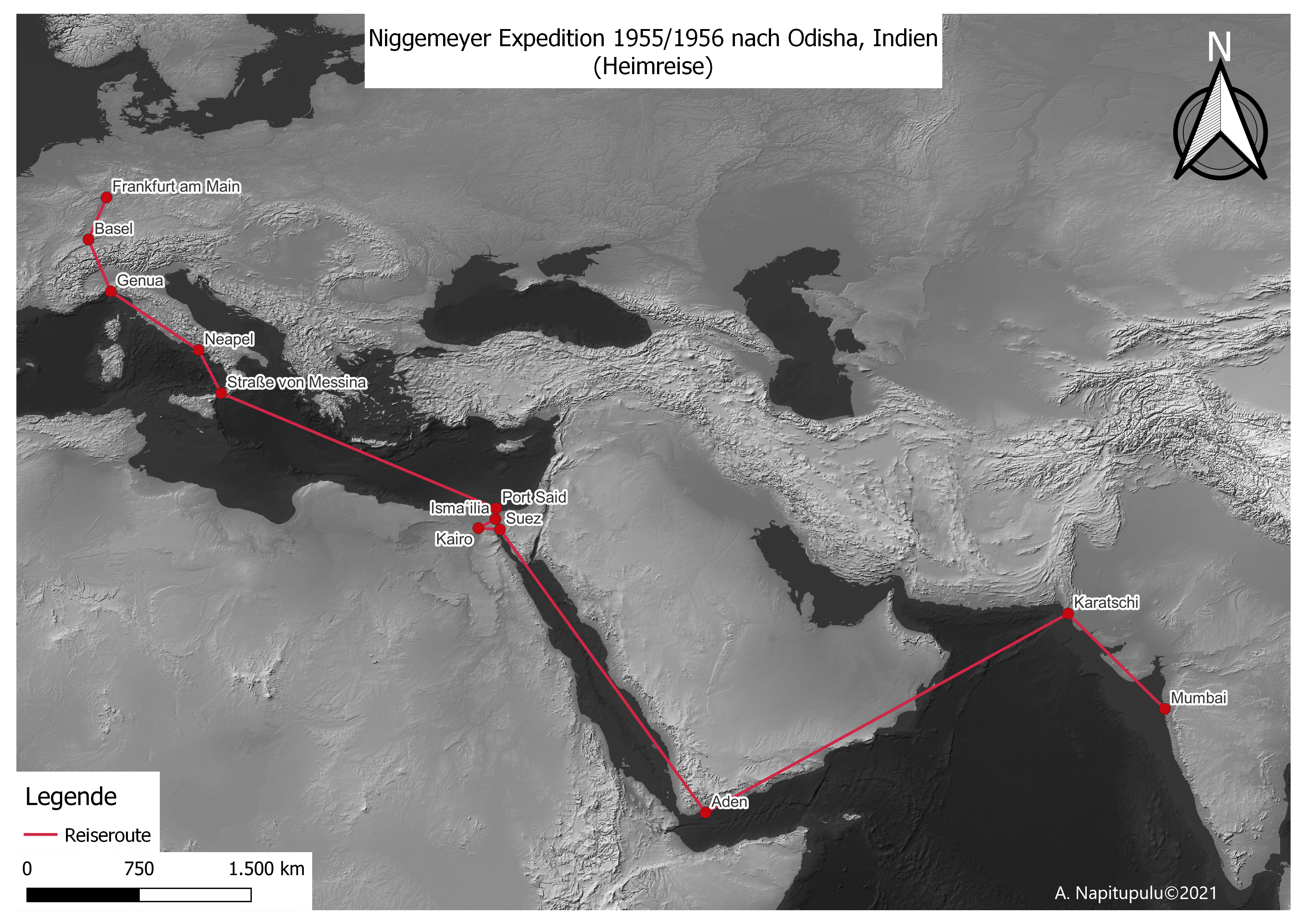
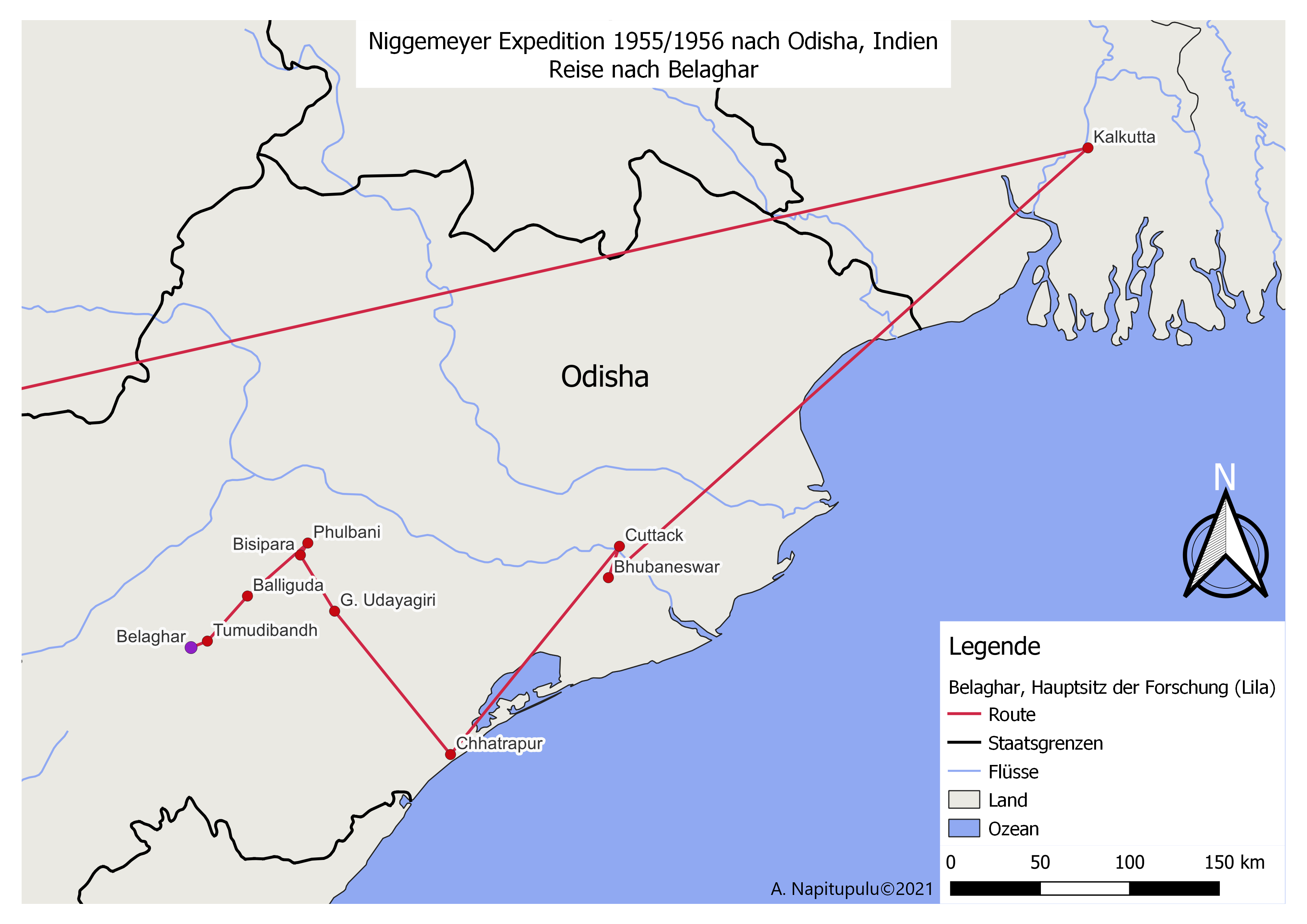
The maps attatched below show the travel routes from Frankfurt (Germany) to their research field in the village of Belaghar (formerly: Belagad), their trip from Belaghar back to Germany, as well as their travels within India. The Niggemeyers came to India by ship, took the train via Kolkata (formerly: Calcutta) to Bhubaneswar, and finally completed the rest of their journey by various cars, lorries and carts.
After finishing their research in Belaghar, the residence during their study of the Kuttia Kond, the Niggemeyers continued to remain in Odisha to study the Ikat-weaving industry in Boudh as well as another Kond group. They also spent some time in Puri to recuperate.
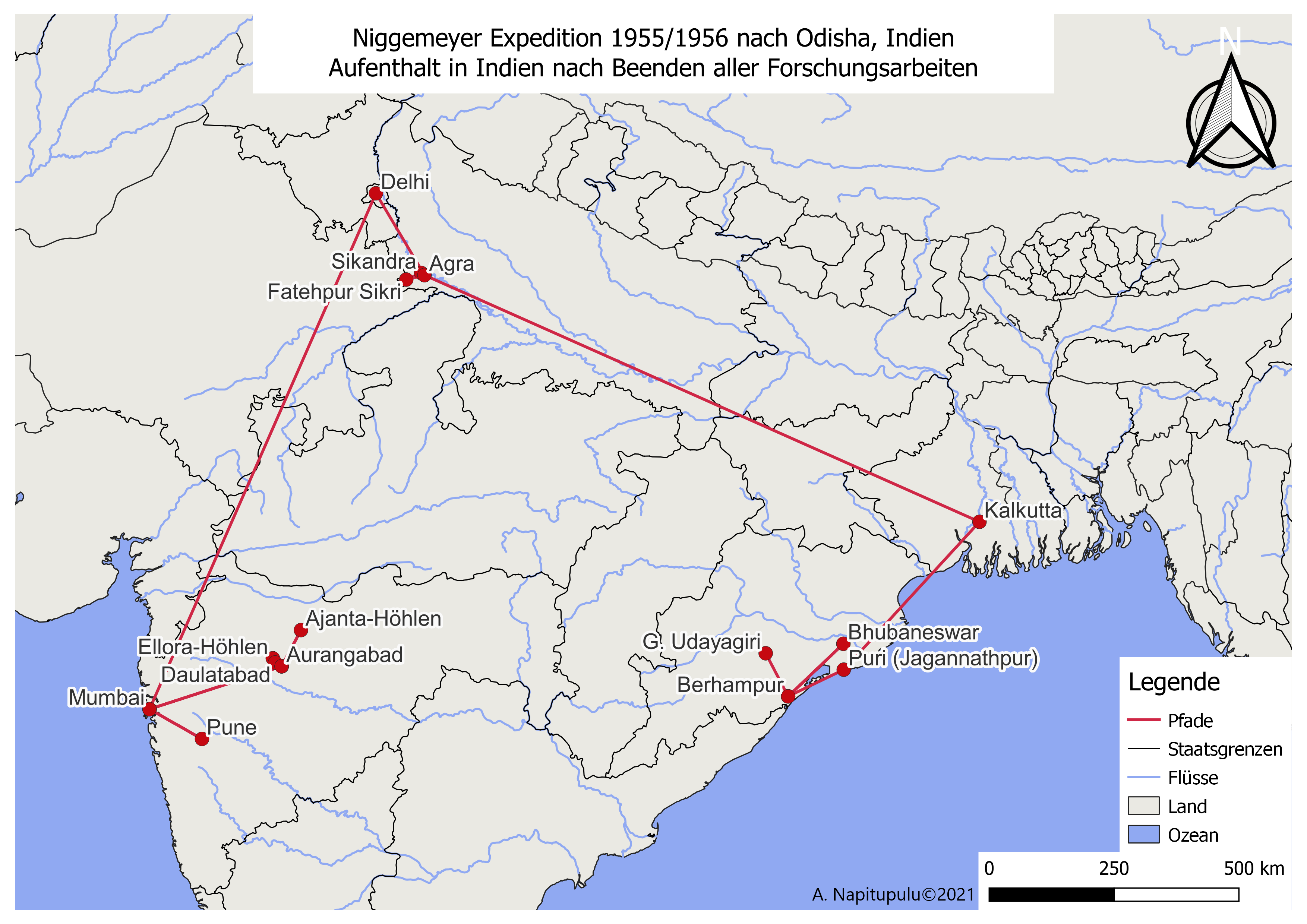
On their journey back to Germany the Niggemeyers made detours across the country, such as in Agra and Aurangabad, before embarking on the ship journey back to Europe in Mumbai. During this cruise, the Niggemeyers toured Egypt and spent time sightseeing.
The map displaying the Kuttia villages that the Niggemeyers visited around their base of operations in Belaghar shows those villages that can still be found today.
The maps were created by Alisa Napitupulu during a student internship in 2021.
Journey from Frankfurt to India:

Journey through India to Belaghar, Odisha:
Visited Kuttia Villages and Towns around Belaghar:

Stay in Odisha after research in Belaghar was completed:

Stay in India after all research in India was completed:
Journey from India back to Germany: