


Job advertisements
We are always looking for student assistants to help us in the archives, with public relations, and in IT.
Please send unsolicited applications with the usual documents to Ms. Paul (secretary's office):
Internships
We regularly offer internships in our archives, collections, and research projects.
Please send unsolicited applications with the usual documents to Ms. Paul (secretary's office):
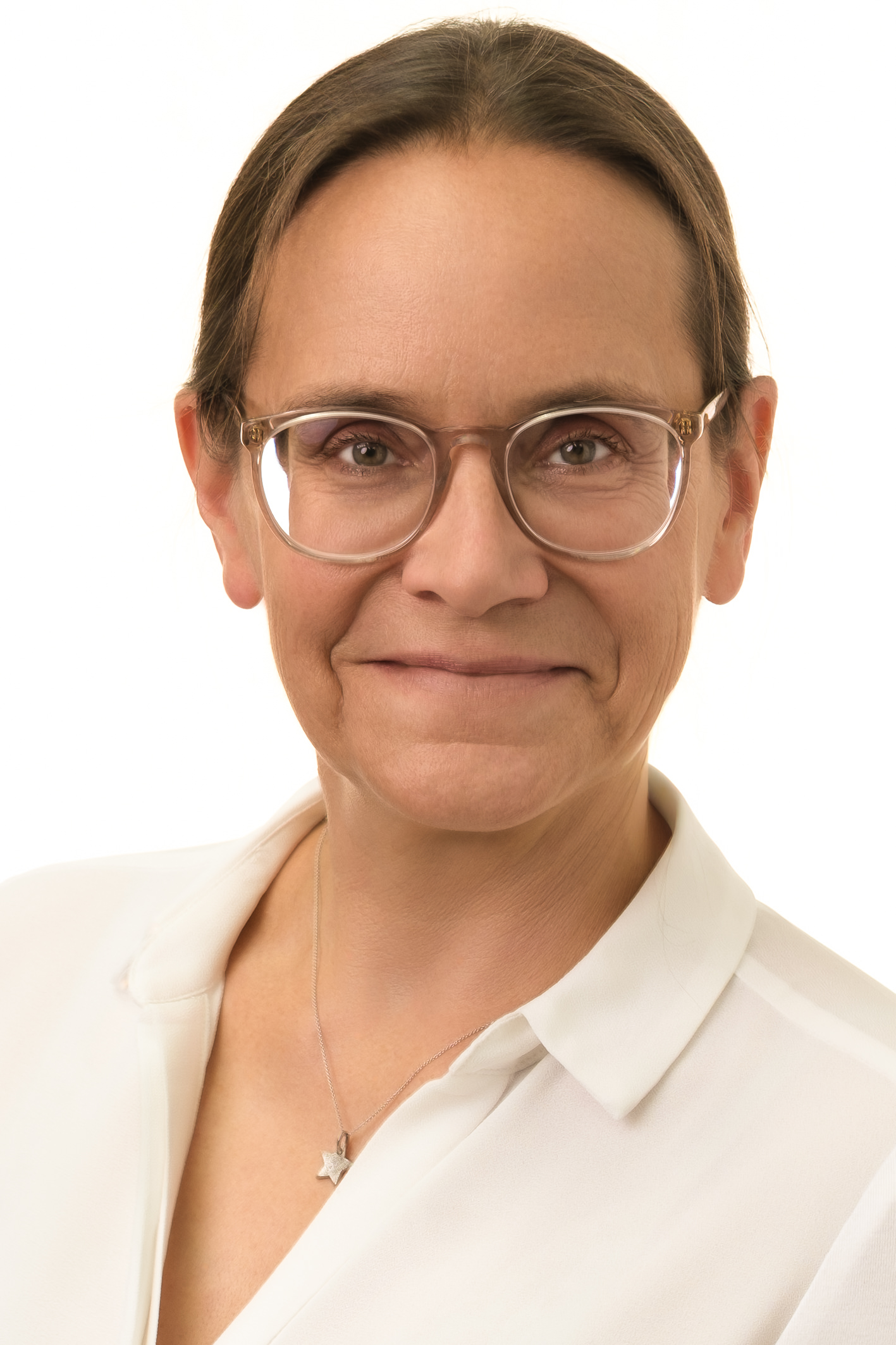
Dr. Alexa Höhn
Phone:
Prof. Dr. Francis B. Nyamnjoh
Incompleteness, mobility and conviviality
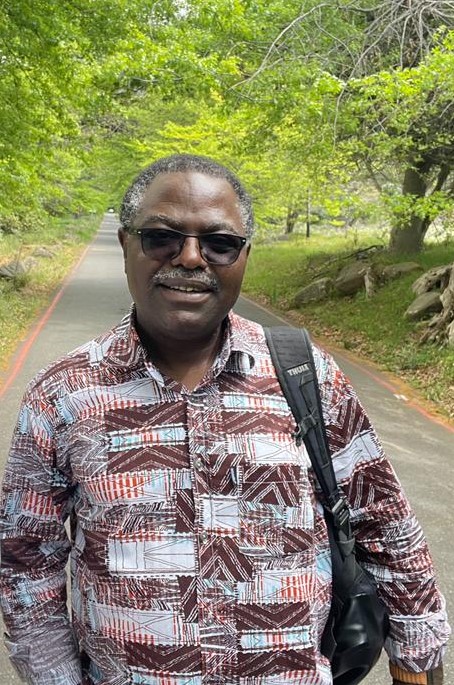 Photo: Minga Kongo Central to the lectures in this series is an invitation to take incompleteness seriously in how we imagine, relate to and seek to understand a world in perpetual motion. How would we frame our curiosities and conversations about processes, relationships and phenomena with an understanding of the universality of incompleteness and mobility? The lectures draw inspiration from popular ideas of personhood and agency in Africa. For instance, in the Cameroon Grassfields where I grew up, we tend to organise and conduct our affairs around the idea that everything in the world and in life is incomplete: nature is incomplete, the suprasensory is incomplete, humans are incomplete, and so is human action, human inventions and human achievements. Despite our obsession with completeness, we are constantly reminded that the sooner one recognises and provides for incompleteness and the conviviality it inspires as the normal way of being, the better we are for it. People are not singular and unified in their form and content, even as their appearance might suggest that they are. And so are things (nature, technologies and others). Fluidity, compositeness of being and the capacity to be present in multiple places and forms simultaneously in whole or in fragments are a core characteristic of reality and ontology of incompleteness. West and Central Africa is a region where interconnections and interdependencies are recognised and celebrated, and used as the dominant and desired template for organising relationships among humans, and between humans and the natural and suprasensory worlds. How do we draw inspiration in this regard to inform our growing ambivalence about rapid advances in digital technologies (artificial intelligence (AI) in particular), as well as with 21st century nimble-footed migrants and strangers knocking at the doors of opportunities we are entitled to as citizens?
Decolonisation: Incompleteness and Convivial Scholarship
This lecture explores how understanding of and the pursuit of decolonisation (of research and knowledge production, anthropological, ethnographic or otherwise) could be enriched by conversations framed around incompleteness, mobility, encounters, debt and indebtedness, compositeness of being, and conviviality as responses to the dangers of the essentialisms that shape and have been shaped by colonialism and coloniality. Given the resilience of colonial education, the lecture proposes a framework of decolonisation that draws attention to equally resilient endogenous traditions of knowledge that are barely recognised and grossly underrepresented. The lecture argues for convivial scholarship that promotes conversations and collaborations across disciplines and organisations and the integration in the academy of marginalised epistemologies informed by popular universes and ideas of reality. Convivial scholarship is predicated upon recognising and providing for incompleteness – in persons, disciplines, organisations, and traditions of knowing and knowledge making. Critical to convivial scholarship is the extent to which we recognise and provide for incompleteness and mobility as universals and are ready to disabuse ourselves of the illusion of completeness championed by zero-sum games of violence and violation in which debt and indebtedness are outsourced to victims, while compositeness and conviviality are downplayed or caricatured.
Representing Diasporas as Incompleteness in Motion
In this lecture, I argue that the meaning we accord the notion of diaspora informs our understanding of diasporic writing, literature and articulations of belonging. I explore diaspora through a framework that brings into a sustained, multidimensional and multi-layered conversation the universality of incompleteness and motion. The lecture draws on African experiences of to offer a nuanced framework for analysing diasporic cultural production and articulation of belonging because it challenges the overly nation-state-centric conceptualisation of the homeland. It demonstrates that such a confining conceptualisation sits uncomfortably with the lived realities of those with multiple-layered identities and belongings mediated by interconnecting geographies and hierarchies within and beyond states, and at local and global levels. The discussion wrestles the conception of diaspora from its longstanding fixation on the whims and caprices of nation-states and broadens its incompleteness in motion by arguing that in the contemporary world, there are as many diasporas as there are homes and dislocations. Thus, events such as the ongoing wars and liberation struggles within and between nation-states have proven that one person’s hometown is simultaneously another person’s diaspora and one person’s home village is concomitantly another’s diaspora respectively. The discussion cautions writers and analysts of diasporic literature and cultural production more broadly to constantly remember that within, beyond and outside the nation-state, frontier homes and frontier diasporas sit side by side complementing each other and facilitating interconnections and interchanges in the manner of a spaghetti junction.
ICTs as Juju: African Inspirations
In this lecture I liken information and communication technologies (ICTs) or digital technologies to what we in West and Central Africa have the habit of referring to as Juju. I invite us as scholars of the digital humanities to see in the region’s belief in incompleteness and the compositeness of being human, as well as in the capacity to be present everywhere at the same time an indication that we have much to learn from the past on how best to understand and harness current purportedly innovative advances in ICTs for present and future articulations of what, how and why we are. It is also an invitation to explore the conceptual potential of the term Juju, especially when it is freed of the stereotypes and prejudices often associated with it. The idea of digital technologies making it possible for humans and things to be present even in their absence and absent even in their presence is not that dissimilar to the belief in what is often labelled and dismissed as witchcraft and magic or the occult that lends itself to a world of infinite possibilities and impossibilities – a world of presence in multiple places and forms and eternal powers to redefine, complexify and nuance reality. The lecture argues in favour of incompleteness as a normal way of being and becoming. It challenges students of humanity – whom we all are – to envisage a relationship between humans and digital technologies that is founded less on dichotomies and binary oppositions, nor on zero-sum superpower games of conquest, superiority and hierarchies. If humans are present in things and things in humans, thanks to the interconnections, the flexibility and fluidity of being that come with recognition of and provision for incompleteness in our being and creativity, it is important to see things and humans not only as intricately entangled and blended, but also as open-ended dynamic composites. This has serious implications for how we, as humans, relate to technologies in general, and ICTs in particular.
Citizenship, Incompleteness and Mobility: Amos Tutuola’s My Life in the Bush of Ghosts
This lecture builds on and substantiates with an exploration of Amos Tutuola’s novel My Life in the Bush of Ghosts a short essay I published in early 2022 on the intersection between citizenship, incompleteness and mobility. The lecture advocates a framework of incompleteness for appreciating citizenship as a permanent work in progress. I argue that the novel helps us understand the making, unmaking and remaking of citizenship. An approach to citizenship that is informed by incompleteness points to the violence and violations that delusions around the idea of completeness have caused the world. To speak of citizenship and belonging in whatever form is to imagine and construct a living-togetherness in liberty that takes seriously the reality of interconnections and interdependencies. One is and becomes a citizen through relationships with others, relationships that are institutionalised in one form or another. No institution, however carefully thought through from the outset, is perfect, hence the need to humbly (and even enthusiastically) embrace incompleteness. Tutuola’s novel depicts the account of a child protagonist fleeing the jealousy of a polygamous home and the chaos and scourge of predatory human wars and ceaseless fighting for absolute control over people and things. He magically disappears under a huge tree – the “future sign tree” –, into a fantasy world of infinite abundance of fantasy spaces. There, four twenty four years as a human or an earthly, he commingles with ghosts and other strange creatures. His nimble-footedness, encounters and diasporic experiences of ghostliness teach us that there is power in incompleteness, in the need for flexible mobilities and enriching encounters and interactions with incomplete others, humans and otherwise.
Die Veranstaltungen finden im Casino-Gebäude, Raum 1.811 (nur 05. Juni) und Raum 1.801 (übrige Termine) statt.
05. Juni 2023: Decolonialisation: Incompleteness and Convivial Scholarship
12. Juni 2023: Representing Diasporas as Incompleteness in Motion
19. Juni 2023: ICTs as Juju: African Inspirations
26. Juni 2023: Citizenship, Incompleteness and Mobility: Amos Tutuola’s My Life in the Bush of Ghosts
Søren Feldborg Pedersen

Phone: +49-(0)69-79833060
Crops of Life: Cereal Cultures in the Highlands of Odisha (India)
The highlands of Odisha in eastern India are home to millions of people, many of whom are cereal farmers and gardeners who grow the staple foods of the region: the many different types of rice and millet. Among these cultivators, there are many groups who consider themselves to be Adivasi or the "first settlers of the country". They speak their own languages and manifest a great cultural diversity, which is reflected in their many agricultural activities, but also in their complex ritual and social practices. Between 2021 and 2025, social and cultural anthropologists and archaeobotanists from India, the Netherlands and Germany have been working with these people to research their cultures, especially the different types of crops they grow. Therefore, the title of the collaborative research projects was Cereal Cultures. This film is a result of these research efforts and looks at how rice and millet, as central resources, affect and are embedded in the lives of the people in the highlands. What do these crops mean to them? How do they deal with new policies? How are their everyday lives and religious practices changing? This film deals with these and other questions. It introduces us to a world where crops are a way of life and where people's lives are entangled with crops from birth to death.
Dr. Carlos Magnavita

Phone: +49-(0)69 798 32105
Jonah Neuenhaus (MA)

Phone: +49-(0)69-798 33076
Yearbooks / Annual reports
Annual yearbook 2023 (German)
Annual yearbook 2022 (German)
Annual yearbook 2021/22 (German)
Annual yearbook 2020/21 (German)
Annual yearbook 2019/20 (German)
Annual yearbook 2018/19 (German)
Annual yearbook 2017 (German)
Annual yearbook 2016 (German)
Annual yearbook 2015 (German)
Annual yearbook 2014 (German)
Dr. Gabriele Franke

Phone: +49 069-79832105